Your monthly digest of Ruby Central updates, community highlights, and Ruby ecosystem news.
From Ruby Central
This month at Ruby Central…
— Beyond Infinite Code: Redefining Responsibility in the AI Era —
Contributed by: Richard Schneeman, Marty Haught, and Shan Cureton
Most Rubyists aren’t debating whether AI can write “good enough” code. It clearly can, at least sometimes. The bigger question now is: when you ask a model to create an HTTP client, a web framework, or even a password vault, who takes responsibility if that code causes problems?
A recent conversation here at Ruby Central began with a familiar question: how can we “ensure open source frameworks can remain sustainable businesses in the age of AI?” The pushback came quickly: open source has never really been a business model to protect, but an ecosystem to steward.
Infinite code, finite trust
One alternative framing that emerged was blunt: “What is the value in OSS now that we have infinite software on tap?” If you can tell your favorite model “write me a Rack-compatible server,” why bother with a gem, a registry, or a long-lived project at all?
The answer many of us kept returning to was collaborative validation, whether that agent is human or AI. Models can generate code, but communities decide whether it’s correct, secure, maintainable, and worth depending on next year. That work of review, iteration, and stewardship is slower than copy-pasting from a chat window. Still, it’s exactly what you rely on when a production incident traces back to a dependency.
In that sense, “infinite code” isn’t entirely new. We already live with vast dependency graphs we don’t fully read. AI just changes who is typing and how much faster we can dig ourselves into a hole.
Open source as accountability, not product
Another tension in the conversation was the idea of “open source businesses.” Many companies built around OSS felt precarious long before AI. A more honest framing is that open source is part of a larger strategy, not the product itself.
What these companies really sell is support, security, performance, and privacy. At the core of all that is accountability. If you’re running banking, healthcare, or logistics systems on Ruby, you need more than code that just compiles. You need someone responsible when a library misbehaves, a security issue surfaces, or an upgrade goes sideways.
That “someone” could be a vendor, a core team, or Ruby Central. It’s rarely the language model that generated the code last week.
When AI is in the loop, who owns the risk?
The AI-maximalist view is straightforward: if models can write everything on demand, why bother with package registries or open source? No packages, no registries, no one needed to maintain them.
That tidy argument falls apart when real risks come into play. Sure, a model can create a password storage and retrieval system. But who checks the design? Who monitors vulnerabilities and manages fixes? Who takes responsibility if a hidden bug leaks credentials months later?
Those questions existed before AI, but AI changes the pace and scale. It becomes trivial to ship more code, faster, with less shared understanding. That throws responsibility back onto maintainers, companies, and communities to decide what “good enough” looks like when AI is part of the toolchain.
An open question for Rubyists
At Ruby Central, we don’t think we have a final answer for how responsibility should be shared in an AI-saturated future.
So, we’re asking you.
If you maintain a gem, how is AI changing what you feel responsible for and what you wish your users or sponsors would handle? If you work at a company, how are you thinking about funding the projects your business depends on as AI speeds up your roadmap? If you’re a Rubyist shipping AI-assisted code, what norms or safeguards do you want from the libraries and tools you rely on?
We’ll keep exploring these questions in the Ruby community and at RubyConf 2026 this July. The code will keep coming. The question is how we choose to own the responsibility that comes with it.
— The Program Themes Shaping RubyConf Las Vegas —
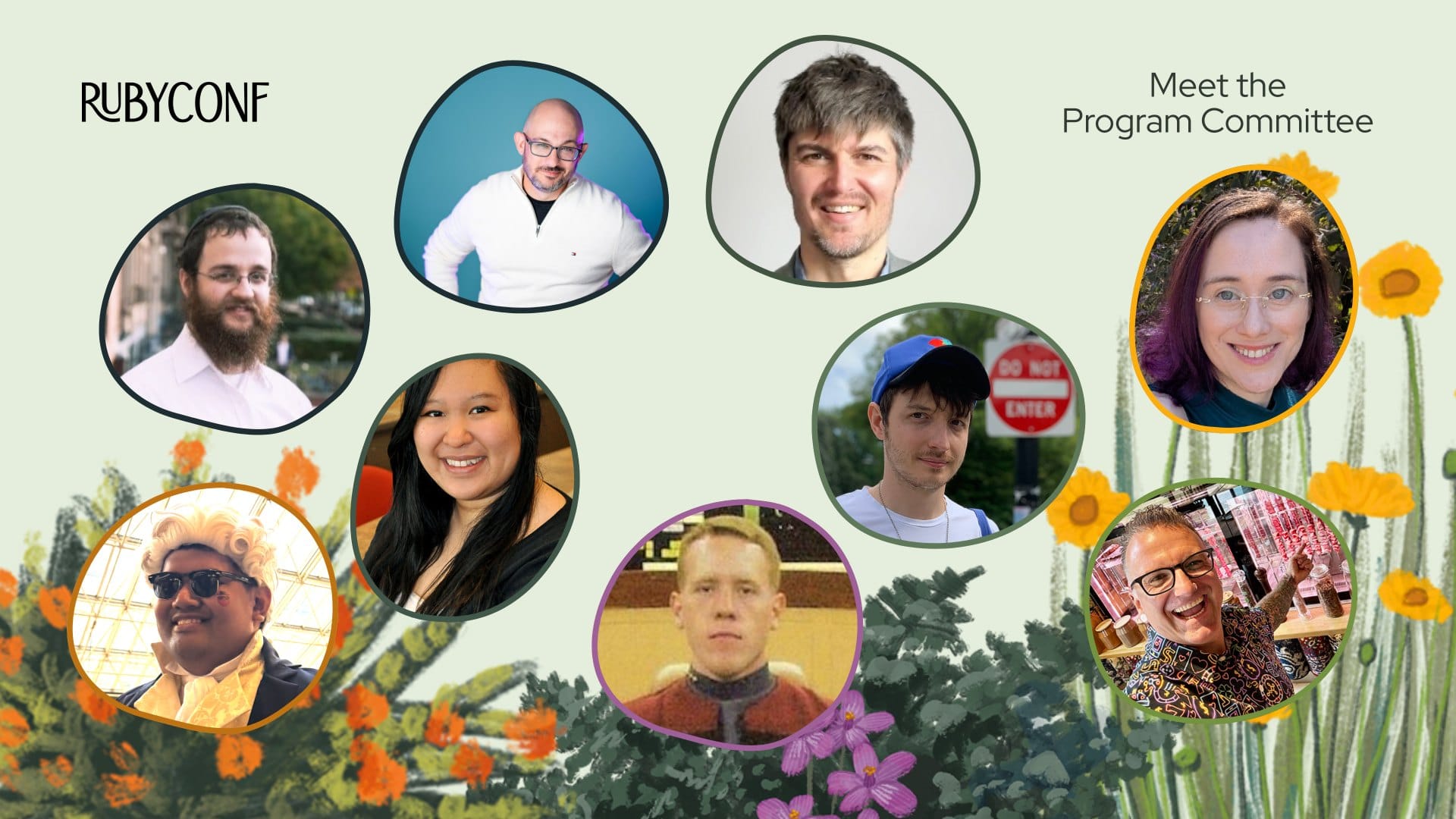
RubyConf 2026 is taking shape, and the program committee has been hard at work since early February: onboarding, training on the Sessionize CFP platform, and collaborating to curate a program that reflects both today's Ruby ecosystem and where it's headed.
As explored in the previous story, Beyond Infinite Code: Redefining Responsibility in the AI Era, the broader tech community is navigating how to embrace AI as a tool without losing sight of the people behind the code. The program committee, volunteers who are also full-time Rubyists, bring that same grounded perspective to RubyConf. They see firsthand what's happening now, what shaped yesterday, and where things might be going.
Together, they've crafted three themes that honor Ruby's roots while opening new doors for storytelling, growth, and the future health of both the language and its community. The co-chairs and the committee designed these themes to thread through every facet of the event — from Session Talks and Hack Spaces to the "Ruby Runway" Pitch Competition, Career Fair, and more.
Living with the Robots
AI-assisted programming is here to stay, so what now? This theme asks us to find the bedrock principles that hold steady in the face of rapid technological and economic change, while also getting tactical. What are you actually doing at the bleeding edge of AI tools? How is it making you more productive, and specifically, more productive with Ruby?
Weird Ruby
A fan favorite. Unspeakably depraved metaprogramming. A spectacularly overengineered solution to a trivially simple problem. Ruby running on a potato. This theme is an invitation to take us somewhere strange, to rattle our brains, stir our hearts, challenge our assumptions, and leave us forever changed. And to do it all in Ruby.
Beautiful Ruby
How do we build systems that don't collapse under the weight of their own complexity? This theme returns to the fundamentals — abstraction, modularity, cohesion, loose coupling, TDD — the timeless practices that make code not only cleaner to read, but more enjoyable to work with and less costly to maintain. It's a reminder of what drew so many of us to Ruby in the first place: beauty, elegance, and practicality.
These themes strike a balance between what keeps us grounded in our Ruby roots and what challenges us to explore new territory, to make mistakes, embrace them, and grow. Whether you're a seasoned speaker or stepping onto a stage for the first time, if you have a story to tell, we'd love to see your submission to the Call for Proposals.
Need a little guidance? Check out our blog resource, TIL in CFP Coaching: How to Submit a Talk Proposal, or reach out to a program committee member directly; they're happy to help you find where your story fits.
We hope to see you in Las Vegas, July 14–16, whether you're on stage or in the room where these conversations are happening.
— In Conversation with David Hill: RubyConf, Community, and the Fundraising Gala —
Fundraising Gala co-chair and RubyConf Program Committee member David Hill sits down with Errol Schmidt (host of Technology for Humans Podcast) to talk about getting more involved in the Ruby community. From attending RailsConf to volunteering at RubyConf, David shares how giving back helped him overcome imposter syndrome and find his place. He also breaks down how the Program Committee works — from talk selection to conference theming — and shares the vision behind Ruby Central's new Fundraising Gala and why celebrating the people who shaped this community matters.
Ruby News Roundup
A curated snapshot of major Ruby ecosystem news
Learn more Ruby News by visiting https://www.ruby-lang.org/en/news/ for the latest updates from the Ruby Core team.
— Ruby Participates in Google Summer of Code —
We're excited to announce that Ruby will participate in Google Summer of Code (GSoC) 2026! This program offers new open source contributors the chance to work on impactful projects supporting the Ruby ecosystem with guidance from experienced mentors. Please read more on how to get involved. Take note that the contributor deadline is Mar 31st, 2026 so join our Discord to explore your project ideas. We’ll help you get your proposal written.
Community Spotlight
Celebrating the people who make our ecosystem thrive. If you or someone you know has a community impact story to share, reach out to us at contact@rubycentral.org.
Featured this month:
There's something magical about the force of community-driven initiatives. The way a handful of passionate people in a room can quietly set something much larger into motion. What began as a humble meetup series in Warsaw has grown into one of the Ruby world's most warmly regarded gatherings. In 2023, that momentum catapulted into the inaugural Ruby Warsaw Community Conference, drawing over 100 developers from across Europe. Now, in 2026, the Ruby Community Conference heads to Kraków: built by enthusiasts, for enthusiasts, and proof that Ruby is still going strong.
Taking place on March 13th at the beautiful Manggha Museum of Japanese Art and Technology, the event features talks from speakers including Obie Fernandez and Marco Roth, a lineup of lightning talks, and seven hands-on workshops for all experience levels. An unofficial kick-off KRUG meetup the evening before (March 12th) adds even more reason to make the trip.
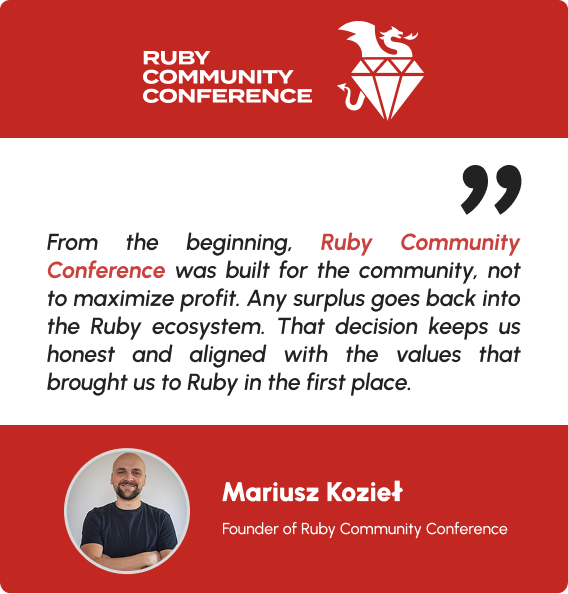
As founder Mariusz Kozieł puts it: "Ruby Community Conference was built for the community, not to maximize profit. Any surplus goes back into the Ruby ecosystem." That spirit says it all. Grab your tickets and find out more at rubycommunityconference.com.
Startup & Company Spotlight
Showcasing companies building with Ruby — curated in collaboration with Tom Chambers.

— Sponsor Spotlight: A Convo with Adam McCrea of Judoscale —
Most of our customers are Rails teams who want their applications to stay fast, their customers to stay happy, and their teams to focus on building. That practical tension is where Judoscale has built its reputation, and it’s also why RubyConf feels personal.
I’ve built my whole career in the Ruby world. Most of the company’s customers are Rails teams that care deeply about craftsmanship and long-term maintainability, but don’t want scaling to become a second full-time job. RubyConf is where those developers and engineering leaders gather. They are the people who think carefully about systems, value stability, and care about doing things well over the long haul. Supporting the conference is a way of investing back into the community that made Judoscale possible.
That alignment shows up in how Judoscale approaches autoscaling. Ruby developers tend to favor simple systems that work- clear, predictable tools over sprawling dashboards and layers of configuration. Judoscale reflects that philosophy by focusing on straightforward signals like queue time rather than complex orchestration setups. The goal is performance and reliability without introducing heavy infrastructure or unnecessary complexity. In short: boring, predictable, and dependable.
As Rails applications mature, scaling decisions become more consequential. Judoscale sees teams outgrowing their original PaaS setups and suddenly needing more control, but without the appetite for hiring a full-time DevOps engineer. Background jobs are a frequent pain point: queues back up, latency spikes, and problems surface only when customers feel them. And many teams are wrestling with whether they “should move to Kubernetes” when what they really want is fewer 2 a.m. surprises and a calmer path to stability.
Those are exactly the conversations Judoscale is eager to have at RubyConf. Not just polished talks (although they are great too), but the hallway stories, like what broke, what surprised teams, and what they would do differently. The messy scaling narratives often teach more than the slides. There’s also a shared curiosity among founders and engineers trying to build sustainable, calm systems that don’t require constant firefighting.
Looking ahead, supporting RubyConf is part of Judoscale’s broader commitment to the long-term health of the Ruby community. Ruby has long been marked by a steady, thoughtful culture. Helping sustain that culture, even in small ways, matters. If infrastructure becomes less stressful for Rails teams, developers have more time to actually enjoy building. And in a community that has always prioritized developer happiness and sustainable systems, that’s an investment that benefits everyone.
Support Ruby Central
Help sustain and grow the Ruby ecosystem. Connect with Tom Chambers to learn more.
Featured this month:
Scholars & Guides Program
— The Scholars & Guides Program: Be Part of What Makes Ruby Special —
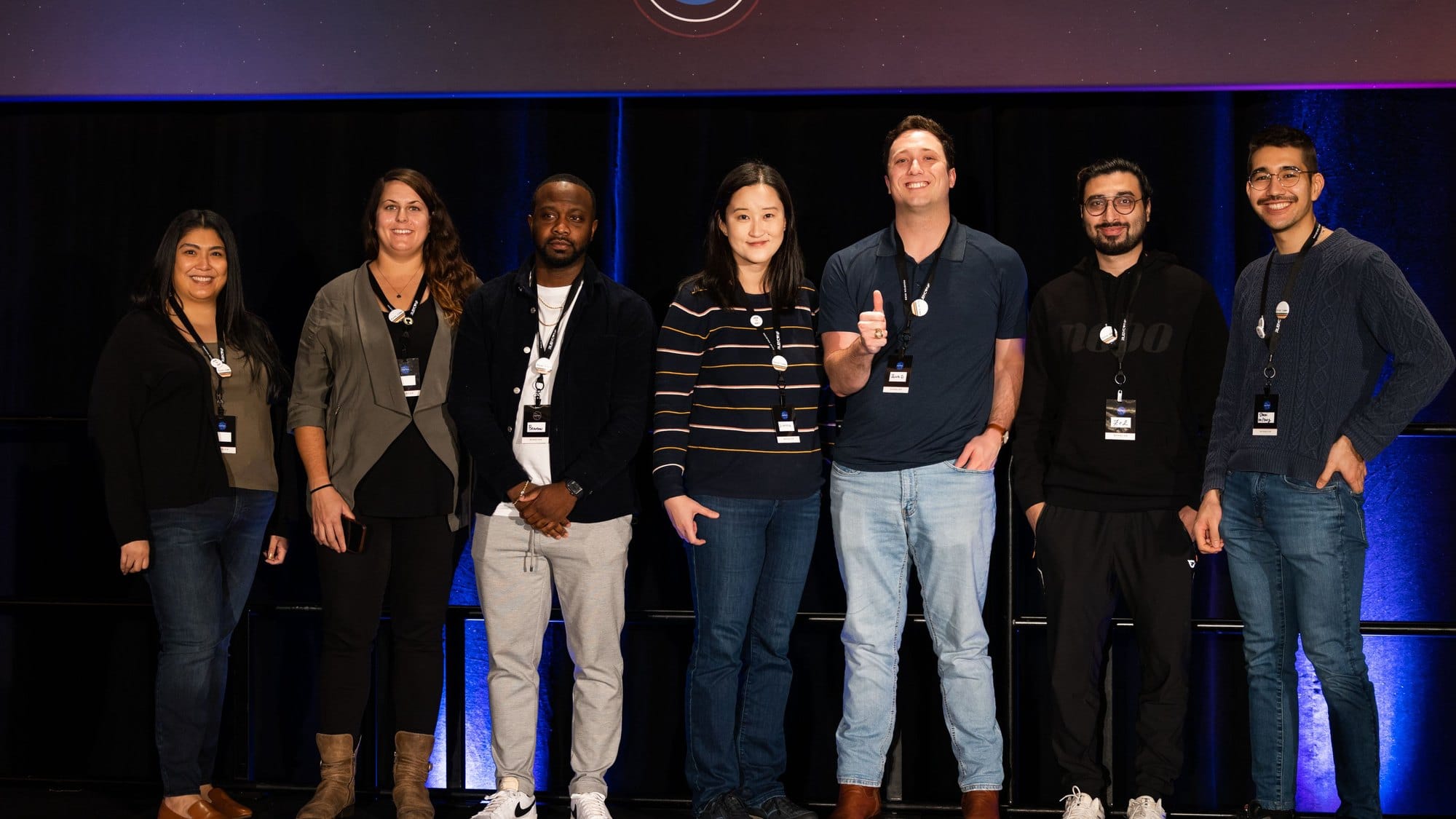
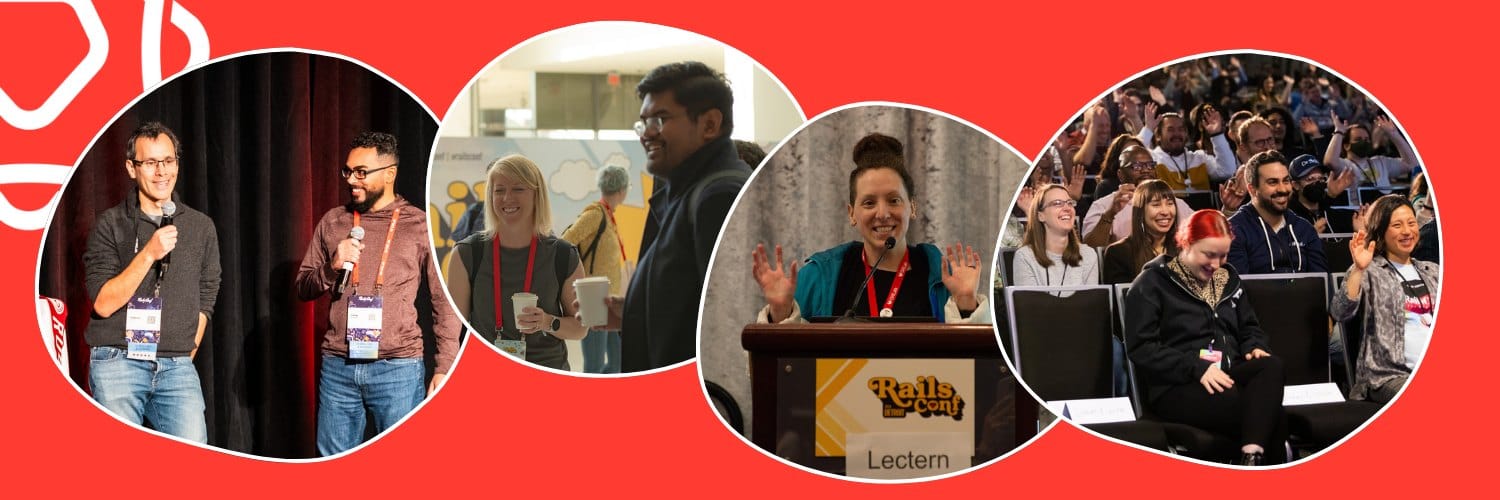
The Scholars & Guides Program from Ruby Central is a direct reflection of what the Ruby community stands for: mentorship, belonging, and growth.
The program pairs aspiring Rubyists from underrepresented communities with experienced mentors (Guides) to help them navigate RubyConf, build connections, and grow as developers.
This spirit reflects the philosophy of Yukihiro Matsumoto — “Matz is nice and so we are nice” (MINASWAN). Ruby was built for people first, and this program carries that philosophy forward by investing in the next generation of developers and strengthening the community that supports them.
We reached out to Scholars and Guides from previous years to hear first-hand about their experiences in the program.
What It Means to Be a Scholar
For many participants, the Scholars & Guides Program is their entry point into a world that can feel intimidating from the outside. First-time conference attendees, bootcamp graduates, career changers, and early-career developers all find their way into the program carrying some combination of excitement and nerves.
For many Scholars, the program is their first step into the Ruby community — often arriving with excitement, uncertainty, and a desire to belong.
Sunjay Armstead, Scholar
"I was very intimidated by attending my first RubyConf. It was also my first ever technical conference. I had no clue what to expect, and was unsure of how to set goals and expectations. I needed a guide; someone to show me the ropes and help me make the most of my three days away."
What he discovered surprised him:
"Wait a minute... People are interested in the work I do? People want to talk to me? People want to help me build my network? I certainly couldn't believe it at first, but the Scholars & Guides program showed me just how great Rubyists are."
He also highlights the impact of the “hallway track”:
"The hallway track is not usually on the official schedule, but it exists. It's that time before talks, between tracks, and after each day wraps up. And it's in these in-between times that you'll grow the most by connecting with others. I am where I am today because of a conversation in the hallway."
Salomon Charabati, Scholar
"I wanted to meet the community and be involved in it. The power of the Ruby community surprised me."
His advice:
"Have fun and enjoy every moment of it. Go and talk to people. That's the best part of it."
Felipe Vogel, Scholar
Felipe came from an unexpected path — a former Latin and English teacher turned software engineer — and joined the program at a pivotal moment after being laid off from his first developer role in 2023.
"Being a scholar made it a lot easier for me to meet people at the conference. I had a default group through scholar events and outings, and it gave me something to talk about — and a confidence boost."
The impact extended beyond the conference:
"The coolest thing is that the connections I formed live on even after the conference. When I later attended RubyConf, I ran into people I'd met before at RailsConf and we picked up right where we'd left off. It'll be like seeing old friends again."
His advice for future Scholars:
"Make an effort to meet people outside the scholars and guides group. That perception that veterans don't want to talk to newcomers doesn't match reality — I found even 'Internet celebrity' Rubyists to be kind and welcoming."
Interested in becoming a Scholar?
Apply to join the program and receive mentorship, connection, and support at RubyConf.
What It Means to Be a Guide
The Scholars & Guides Program is not a one-way exchange. Guides consistently describe their experience as one of the most rewarding things they do at any conference, and often, in their professional lives more broadly.
The experience isn’t one-sided. Guides consistently describe mentoring as one of the most meaningful parts of their professional lives.
Andy Andrea, Guide
"I was a little worried that I wouldn't be a good fit. I hadn't really interacted with the community much before and didn't have too much experience going to conferences. That said, I did really love and value mentorship."
What keeps him returning:
"I learn so much from getting to chat with people who are relatively new to software development or even just to Ruby. The types of questions that scholars ask are often completely different from what I chat about with more veteran Rubyists."
On seeing scholars grow:
"Seeing scholars give their first lightning talks, make their first open-source contributions, come back as guides, or get hired at a new job can feel borderline indulgent… extremely energizing — like a triple shot of espresso to the soul."
Chris Oliver, Guide
"I was that awkward person at my first handful of conferences, so I wanted to help give a warm welcome to new people. We're all here to share our love for the same thing."
Frederick Cheung, Guide
"One of my scholars got in touch a few months later asking for tips about CFPs, so I felt so proud when I saw that he got a speaker slot at Euruko."
His advice:
"Approach it with an open mind. You won't know what help someone needs, or what help they can give you, until you get to know them."
Michael Lee, Guide
"Even if you don't think you have something to offer, someone, somewhere, will value your time and experiences."
And the exchange goes both ways:
"Insight from the next generation of developers is genuinely valuable… hearing about their struggles has made me a more empathetic mentor and a better professional overall."
Want to give back as a Guide?
Share your experience and help shape the next generation of Rubyists.
Why This Program Matters
The Scholars & Guides Program is a direct investment in Ruby’s future. It creates access, builds lasting professional relationships, and strengthens the community that keeps the language thriving. Every Scholar supported and every mentorship formed helps ensure Ruby remains welcoming, innovative, and human-centered.
You can support the program by:
- Purchasing a Supporter ticket to RubyConf 2026 — contributions directly fund initiatives like Scholars & Guides.
- Making a donation to Ruby Central — one-time gifts help expand access and mentorship opportunities.
- Corporate sponsorship or fundraising participation — organizations can make a larger impact through community investment. Connect with Tom Chambers.
Supporting Scholars & Guides is an investment in people first. It’s a reflection of the values Ruby was built on and one of the most meaningful ways to strengthen the community.
Quick Links & Upcoming Dates
- Supporter & VIP tickets are available now for RubyConf 2026. Early bird tickets will be available very soon. Get your tickets here.
- Fundraising Gala early bird ticket rates and after party tickets now available. Join us at the gala.
- Scholars & Guides applications are now open. We welcome all of those to check out the program and learn about its impact on the future of Ruby through community-driven leadership and support. Scholar Applications Here. Guide Applications Here.
- Submit a talk proposal for RubyConf 2026 Las Vegas. Deadline is March 15, 2026 at 11:59PM.
- The Ruby Runway Pitch Competition deadline has extended for submissions to April 17th, 2026. You can learn more about this opportunity on our Ruby Runway website.